

Flood insurance claims and appraisal
For homes and businesses insured under the National Flood Insurance Program or a private flood policy.
A flood claim runs on federal rules: your own sworn proof of loss within 60 days, an appraisal clause that settles price and nothing else, and one year to sue from the first written denial. Here is what the policy pays below the waterline, the deadlines that matter, and what to do when the payment falls short.
No charge for the review. We take flood claims in every state but Minnesota.
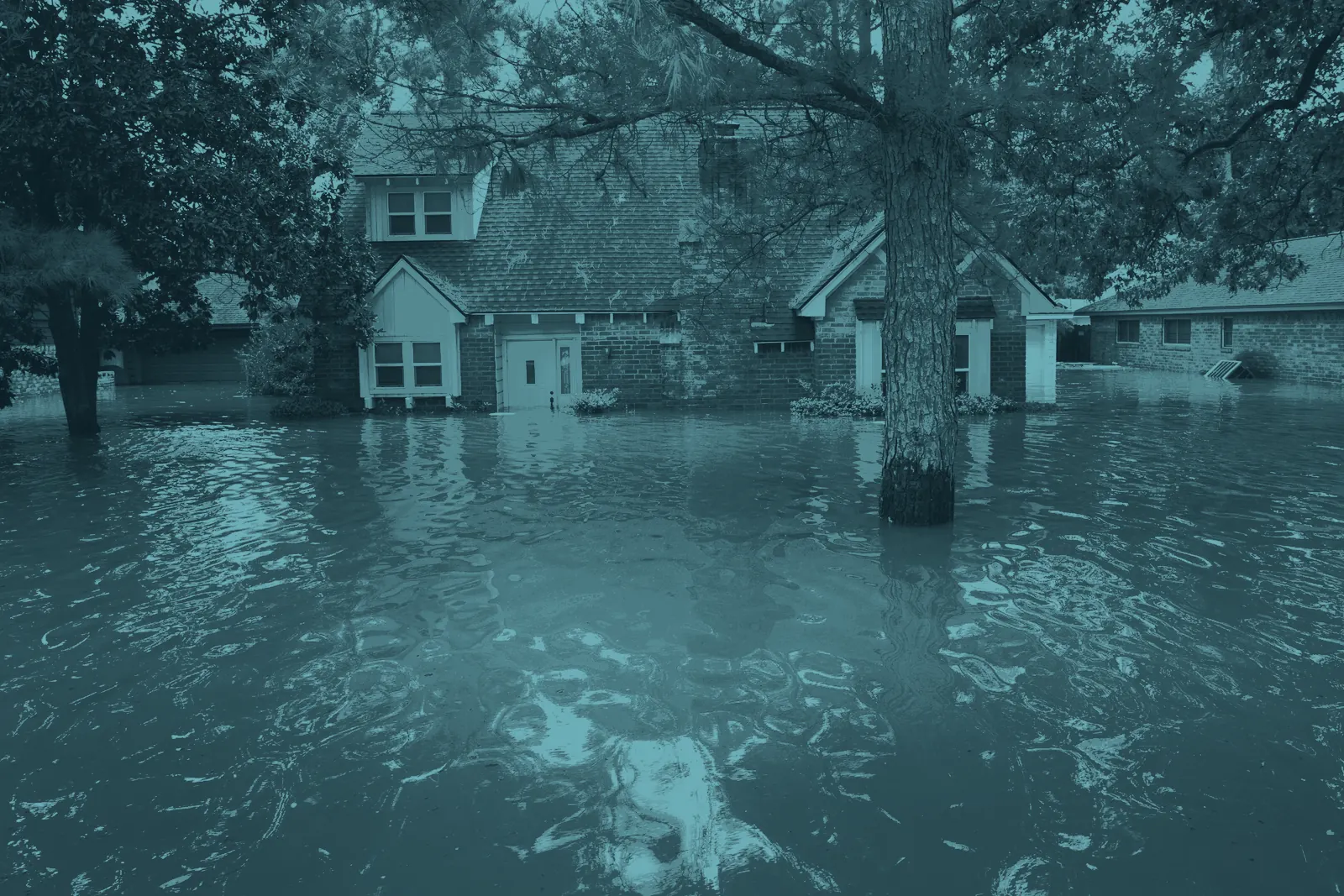
How NFIP flood claims differ from homeowners claims
Most flood insurance in the United States is written under the National Flood Insurance Program. The company on the paperwork may be a household name, but the policy is FEMA’s, the money is federal, and the rules are not the ones in your homeowners policy. Your state insurance department does not set them.
Flood claims are often underpaid or denied because one of these rules was missed. These four matter most.
- Article X Federal law governs the policy
-
“governed exclusively by the flood insurance regulations issued by FEMA, the National Flood Insurance Act of 1968, as amended … and Federal common law.”
State insurance law and state deadlines do not govern an NFIP claim, and the insurer cannot change a word of the policy; only FEMA can.
- Article VII.G.4 You must file a proof of loss within 60 days
-
“Within 60 days after the loss, send us a proof of loss, which is your statement of the amount you are claiming under the policy signed and sworn to by you.”
It is your figure, not the adjuster’s, and you must file it even if no one hands you the form. Your insurer cannot extend the deadline. FEMA can, and often does after large disasters.
- Article VII.M Appraisal can only settle the price
-
“If you and we fail to agree on the actual cash value or, if applicable, replacement cost of your damaged property to settle upon the amount of loss, then either may demand an appraisal of the loss.”
FEMA’s rules require an agreed list of damaged items and your documented proof of loss first. Appraisal cannot decide scope, coverage or cause.
- Article VII.O You have one year to file suit in federal court
-
“you must start the suit within one year after the date of the written denial of all or part of the claim”
The first denial starts the clock, later letters do not restart it, and an appeal to FEMA does not pause it. The suit goes to the United States District Court where the property is.
Quoted from the Standard Flood Insurance Policy, Dwelling Form, October 2021 edition.
What flood insurance covers below the water line
The flood policy draws a line of its own at the basement stairs. On the first floor it covers the building and, if you bought it, what you own. In a basement it covers only what it names. Set how deep the water stood.
The basement has filled, and the water stands 2′-6″ deep on the first floor.
Building property Coverage A, on the first floor 6 of 7
- Drywall, insulation and paint
- Finished floors and the subfloor
- Baseboards, doors and trim
- Base cabinets and countertops
- Refrigerator, range and built-in dishwasher
- Outlets and the wiring behind them
- Upper cabinets
Personal property Coverage B, if you bought it 2 of 2
- Sofa, rugs and furniture
- Television and electronics
In the basement, covered Only because the policy lists them 7 of 7
- Furnace and central air
- Water heater
- Circuit breaker box
- Sump pump
- Stairway
- Footings and foundation walls
- Washer and dryer
In the basement, limited Covered in part 1 of 1
- Drywall, as bare board only; not tape, finish or paint
In the basement, not covered Not on the policy’s list 2 of 2
- Carpet and finished flooring
- Furniture and belongings
From the Standard Flood Insurance Policy, Dwelling Form, articles III.A and III.B. A basement is any floor below ground level on all sides; the same limits apply below the lowest elevated floor of some elevated buildings. The drawing is an illustration, and your declarations decide what you bought.
How to document flood damage before you throw anything away
Wet drywall, insulation and carpet have to come out fast, before mold sets in. FEMA expects you to start; it also expects proof of what was there. Both can be done in the same afternoon.

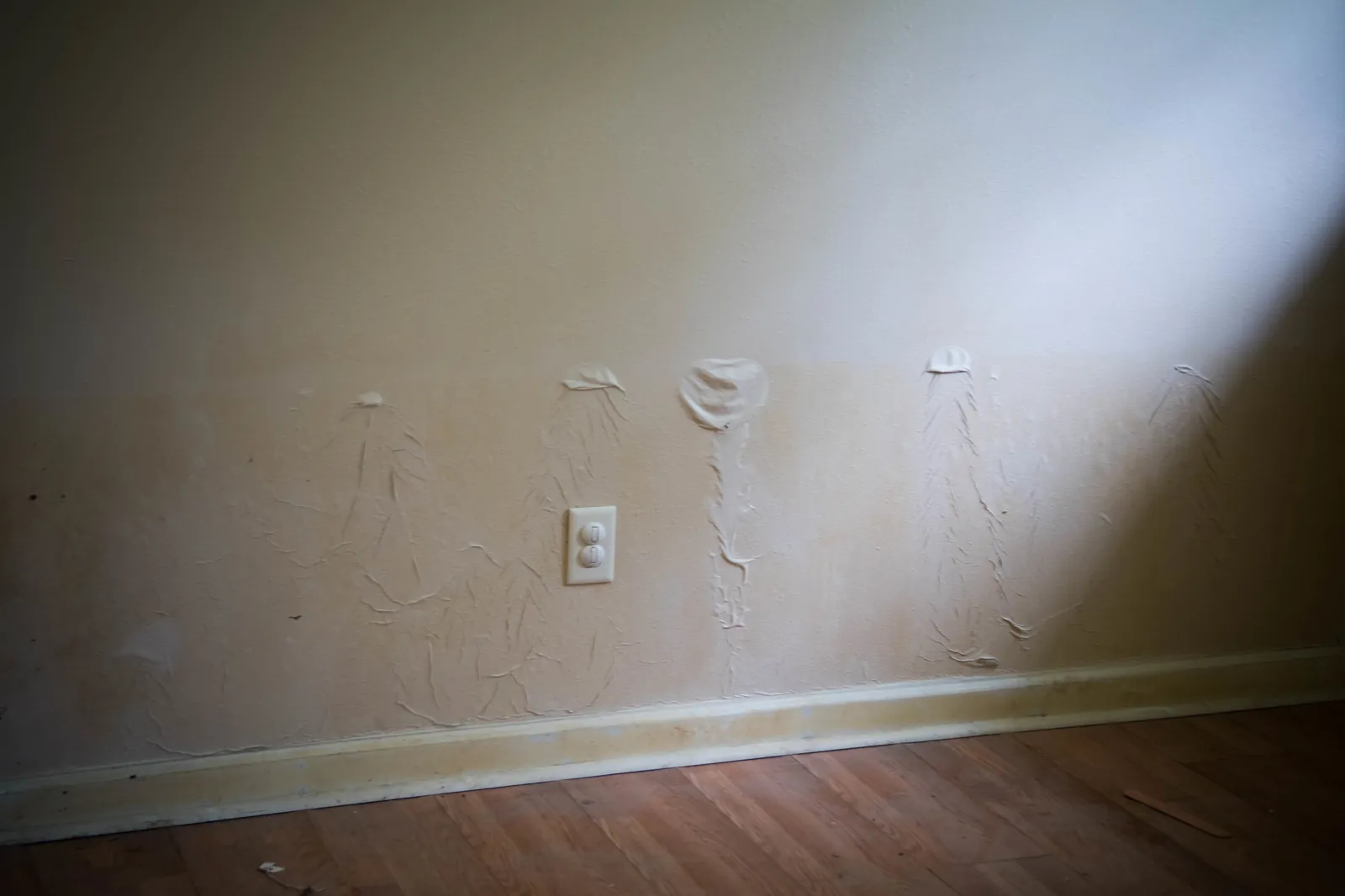
- The line itself. Photograph it with a tape measure held from the floor, in every room.
- Outlets and wiring below the line, which an electrician will need to check.
- Blistered paint over wet drywall. Drywall wicks water upward, so it is cut out above the line.
A living room after the August 2016 flood, Baton Rouge, Louisiana. U.S. Air Force photograph, public domain.
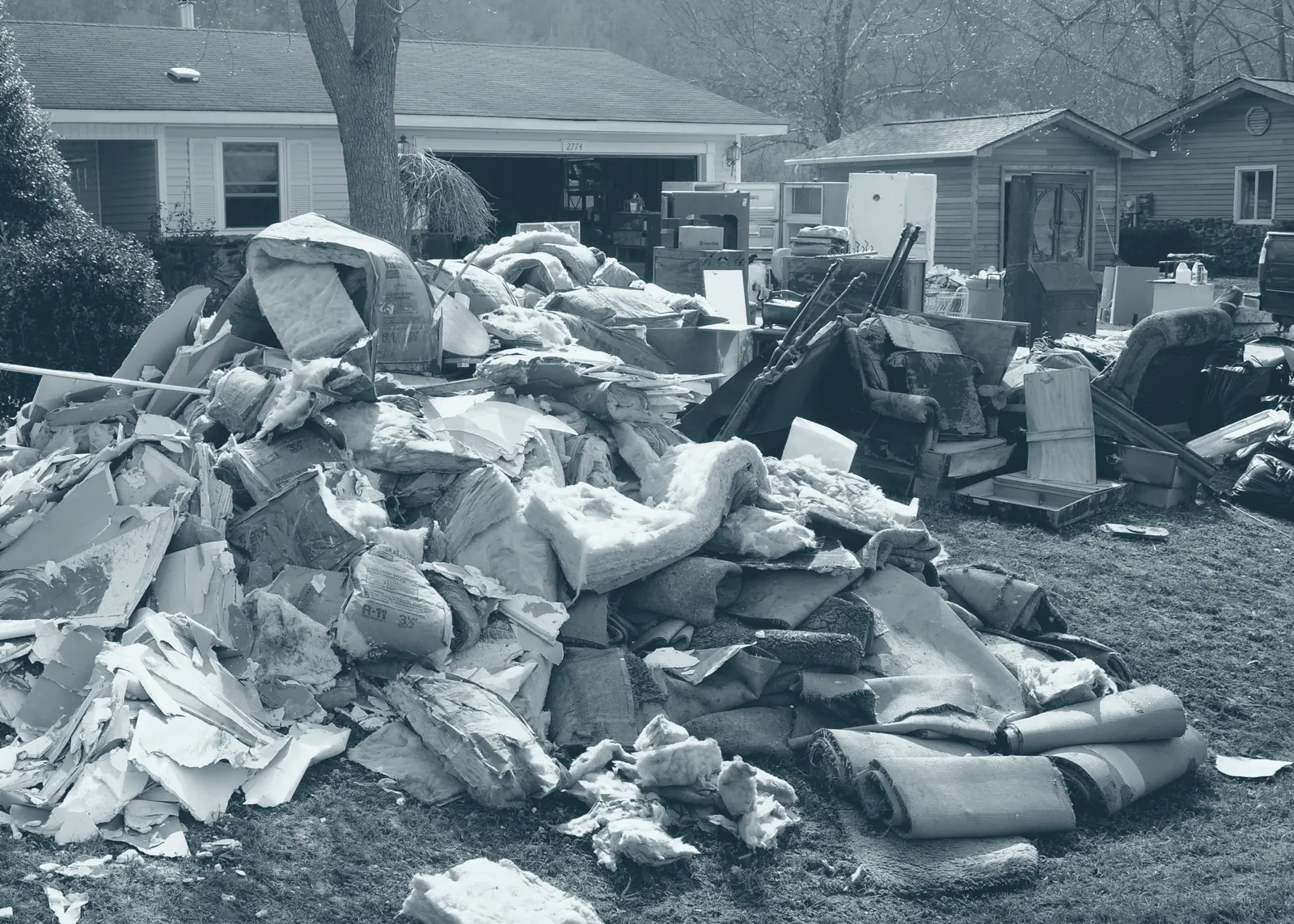
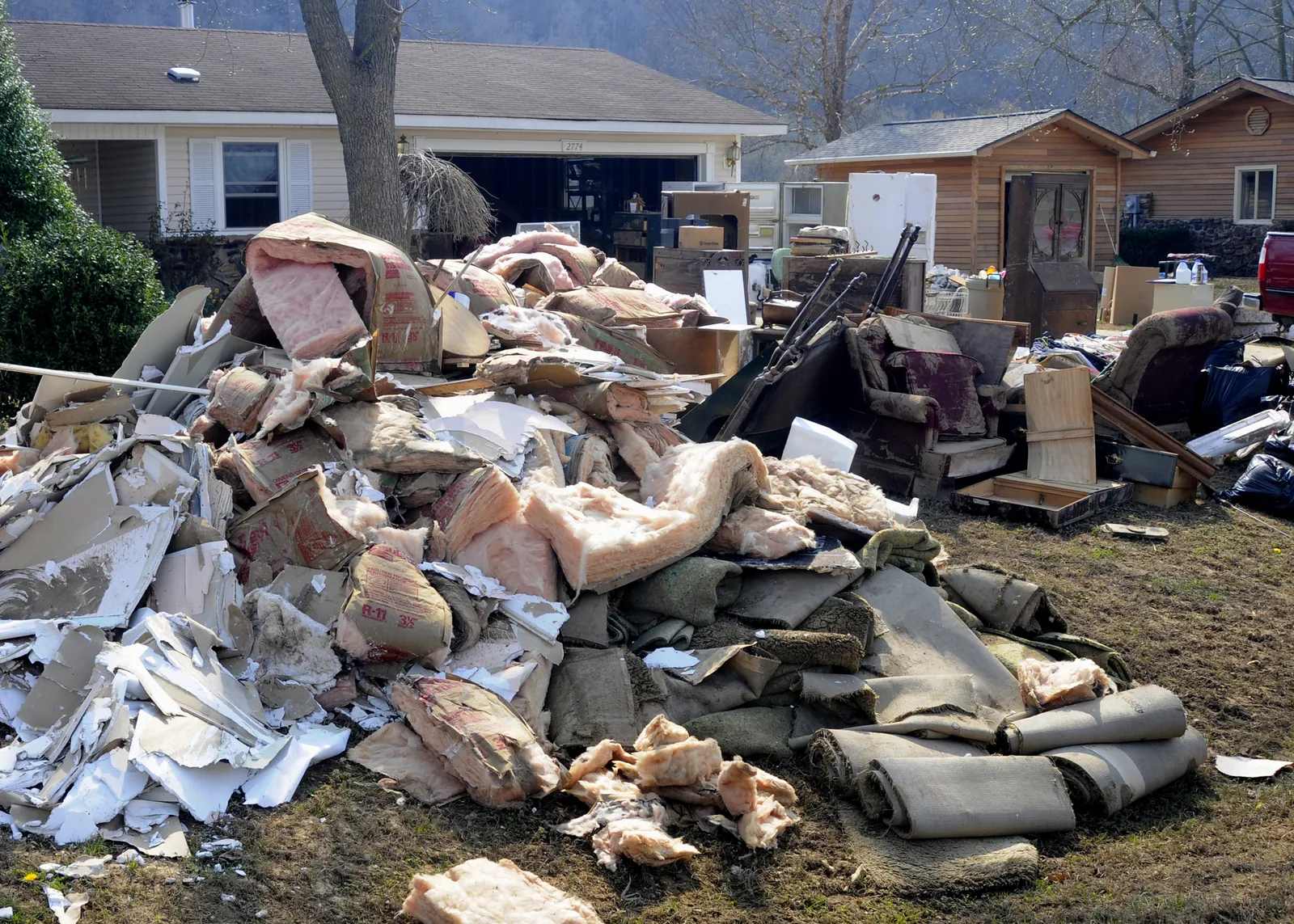
- Wet insulation and drywall: photograph the walls they came from first.
- Carpet and pad: keep a cut sample for the adjuster.
- Furniture and appliances: photograph each one, and its label, before it goes.
Household debris after the March 2008 floods, Norfork, Arkansas. FEMA photograph by Win Henderson, public domain.
FEMA’s steps for documenting a flood claim
From the NFIP Claims Handbook, August 2024. The words in quotation marks are FEMA’s.
-
Report the loss right away
“File your notice of loss with your insurance agent or insurer promptly, even if you are unsure if your loss is covered or exceeds the policy deductible.”
-
Separate damaged and undamaged items
“Separate damaged from undamaged property as required by your policy and make every effort to protect undamaged property.”
-
Keep damaged items until the adjuster sees them
“Do not discard anything before your adjuster sees it unless the damaged item presents a health hazard or local law requires you to discard it.”
-
Save samples of flooring and carpet
“Be sure to keep samples for your adjuster to review (e.g., keep a piece of flood-damaged wall-to-wall carpet, wood floors, etc.).”
-
List your damaged belongings
For each item of personal property: purchase price, description, quantity, approximate age and manufacturer, with photographs and receipts where you have them.
-
Keep drying and cleanup records
“FEMA requires a properly completed drying log.” Keep invoices for pumping, drying and mold treatment; clean-up of covered property is covered.
Calculate your flood claim deadlines
A flood claim keeps three clocks, and none of them waits for the claim to be finished. Two dates set them all: the day of the flood, and the date printed on the insurer’s first letter denying all or part of the claim.
Enter yours. Nothing is stored or sent.
- Signed, sworn proof of loss 60 days after the flood. SFIP VII.G.4
- Enter the date of the flood FEMA can extend this after a large disaster, by bulletin; your insurer cannot. After Hurricane Helene it became 180 days.
- Written appeal to FEMA 60 days from the date on the denial letter. 44 CFR 62.20
- Enter the date on the denial letter Only if you have not used appraisal. An appeal does not pause the deadline to sue.
- Lawsuit, in federal court One year after the first written denial. SFIP VII.O
- Enter the date on the denial letter Later denial letters do not restart it, and neither FEMA nor the insurer can extend it.
Counted in calendar days, as FEMA counts them, for a policy under the National Flood Insurance Program. Private flood policies set their own deadlines under state law. This is a guide to the policy’s terms, not legal advice; if a deadline is close, act on the earlier date and ask your insurer or an attorney.
What to do if your flood claim payment is too low
FEMA encourages you to start with your adjuster and insurer. If that does not settle it, the route depends on what the disagreement is about, and choosing one can close another.
What is the disagreement about?
-
Request additional payment
A supplemental proof of loss, with documentation such as a contractor’s detailed estimate, for damage that was missed or costs more than the adjuster allowed.
- Deadline
- Within the proof of loss deadline or a FEMA extension; a late one needs a FEMA waiver
- Cost
- None
- Note
- It is not a new claim, and it may not be denied only because repairs are unfinished
WhoYou, with your adjuster and contractor
-
Appraisal
Two appraisers and an umpire set the actual cash value or replacement cost of items both sides agree the flood damaged. Price only, not scope or coverage.
- Deadline
- Each side names an appraiser within 20 days of a written demand
- Cost
- Your appraiser, and half the umpire
- Note
- Needs your signed proof of loss with documentation first. It settles the whole claim, and rules out a FEMA appeal
WhoAn appraiser with no stake in the payment. That is us
-
Appeal to FEMA
A written appeal to FEMA after the insurer denies all or part of the claim. FEMA reviews the claim file and decides; its decision is the final administrative review.
- Deadline
- 60 days from the date on the denial letter
- Cost
- None
- Note
- Cannot add coverage. Unavailable after appraisal, and ends if you sue. Does not pause the one-year clock
WhoYou, or a representative you name
-
Lawsuit
A suit in the United States District Court where the property is: against the insurer, or against FEMA if NFIP Direct wrote the policy. Federal law governs.
- Deadline
- One year after the first written denial of all or part of the claim
- Cost
- An attorney’s fees
- Note
- You must have met the policy’s requirements, including the proof of loss
WhoAn attorney who handles flood insurance cases
You can choose appraisal or an appeal, but not both. FEMA allows one of the two for each claim, so check your deadlines before you decide.
Flood damage or wind damage: which policy pays
Below the flood line, the damage belongs to the flood policy. Above it, damage the wind did, a roof torn open or a window blown in and the rain that followed, belongs to the homeowners policy. After a hurricane that usually means two policies, two adjusters and two claims; FEMA tells the flood adjuster to coordinate with the other.
Where wind and water damaged the same thing, states treat the policies’ wording differently. The rules in your state
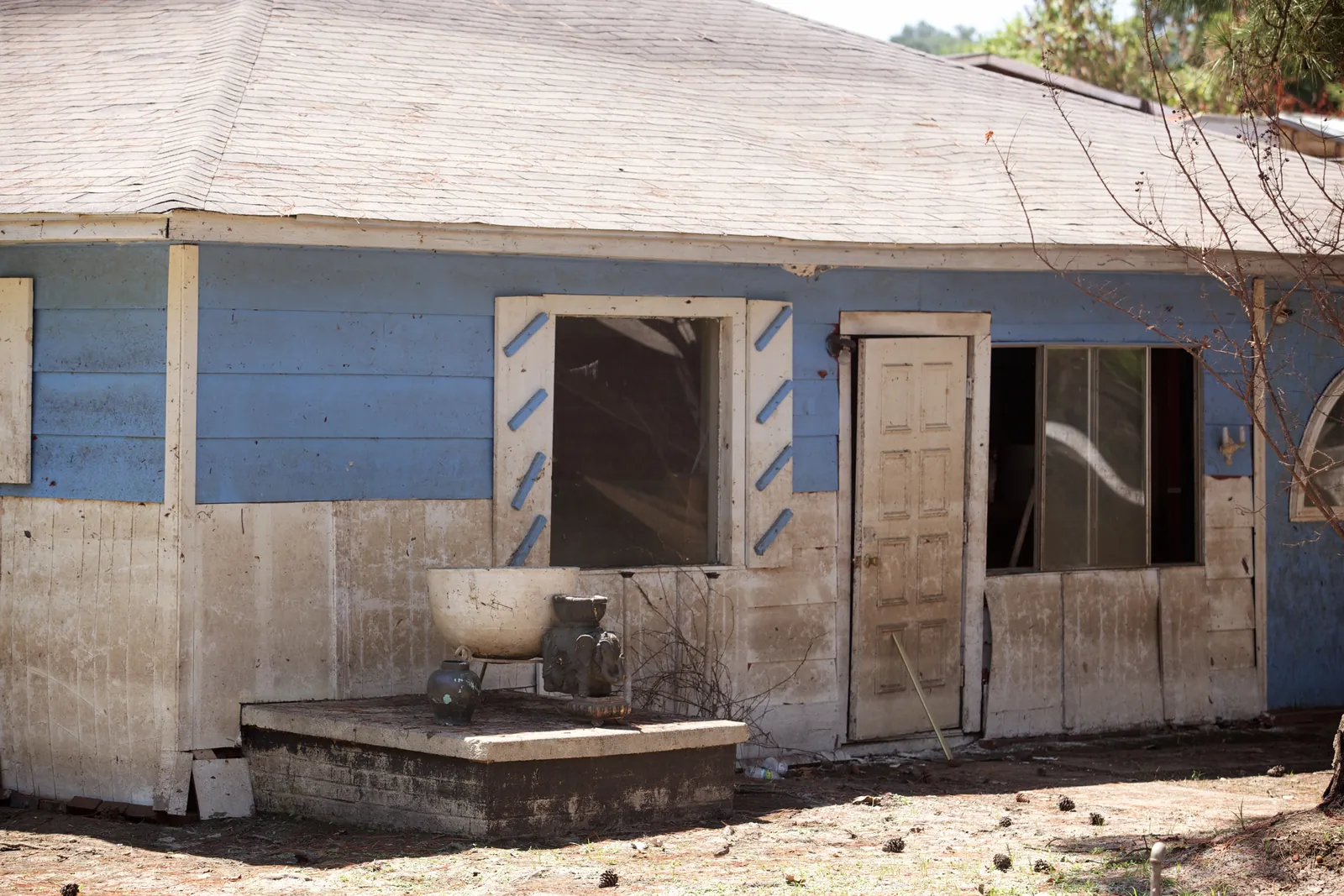
- Below the line: a flood claim, under the flood policy.
- Above it: if wind broke the roof or a window, a homeowners claim.
- Doors, framing and finishes below the line, gutted so the walls can dry.
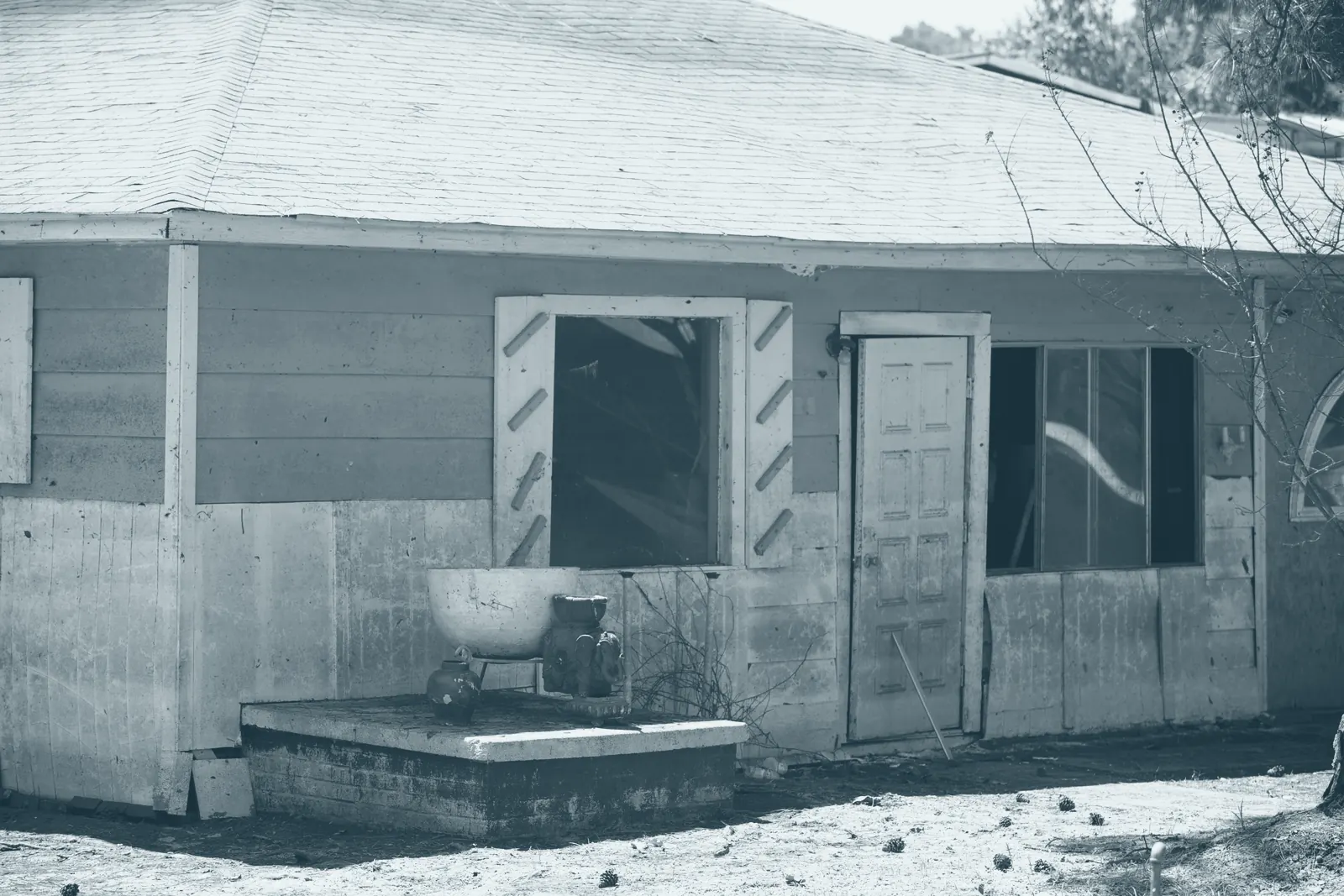
A house after the Mississippi River flood of 2011, Vicksburg, Mississippi. FEMA photograph by Christopher Ragazzo, public domain.
| Source | What it pays for | What to know |
|---|---|---|
| A flood policy under the NFIP | Direct physical loss by flood: the building to $250,000 and contents to $100,000 for a home; $500,000 each for a business. | Federal rules and deadlines. No living expenses, lost income or other economic loss. A new policy usually takes 30 days to take effect. |
| A private flood policy | What its own form says, with limits that vary by company. | Written and paid by the company, under state law. Its appraisal clause and deadlines are its own. |
| Your homeowners policy | What the wind did, and rain that came in through the opening the wind made, plus burst pipes and other covered water. | Flood is excluded. Living expenses are paid only when a covered peril made the home unlivable. |
| FEMA disaster assistance | Grants for needs insurance does not cover, such as temporary housing and essential repairs. | Only after a presidential disaster declaration. It cannot pay for a loss insurance already paid, so you will be asked for your settlement or denial. |
| An SBA disaster loan | Losses not fully covered by insurance: up to $500,000 to repair a primary residence and $100,000 for personal property. | A loan, repaid with interest. Insurance proceeds may be deducted from the amount. |
Private, commercial and condominium flood policies
Private flood policies
Written, serviced and paid by the company itself, on its own form, under state law. Coverage and limits vary, deadlines follow the policy and the state, and any appraisal clause is the policy’s own. We read the form you have.
Businesses and larger buildings
The NFIP’s General Property Form insures non-residential buildings and buildings of five or more units, up to $500,000 for the building and, for a business, $500,000 for contents. It settles at actual cash value and pays nothing for lost business income.
Commercial property appraisalCondominium associations
The Residential Condominium Building Association Policy insures the building, up to $250,000 times the number of units, at replacement cost, with its own coinsurance rule. Each owner’s unit policy is separate.
How Ocean Side helps with flood claims
A flood claim can go wrong in more ways than a pricing dispute, and appraisal fits only one of them. We will tell you which one you have before you spend anything with us.
Our fee meets FEMA’s rule for appraisers
FEMA does not allow an NFIP appraiser to profit from a higher claim payment. We are never paid a share of any award; the fee is flat, $2,500 for a home, and stated in writing before anything starts. Under the policy, the insurer pays its own appraiser and the umpire is shared.
How we work, and what it costs-
A flood claim review (we help with this)
We read the policy, the adjuster’s estimate and the insurer’s letters, sort what is price from what is scope or coverage, and tell you which route fits and by when. No charge.
-
Appraisal on an NFIP claim (we help with this)
When the damaged items are agreed and the price is not, we serve as your appraiser once your documented proof of loss is in, and prepare the item-by-item pricing the policy’s clause requires.
-
Appraisal on a private flood policy (we help with this)
Under the policy’s own appraisal clause, read as that policy writes it, with its own deadlines.
-
Wind damage from the same storm (we help with this)
If the same storm damaged the roof or let rain in, that homeowners claim follows the ordinary appraisal clause, and we handle it as any appraisal.
-
Appeals to FEMA and lawsuits (we do not do this)
We do not file them. If your claim needs one, we will say so early, while the deadline is still ahead of you, and tell you who can help.
-
Negotiating the claim for you (we do not do this)
That is a public adjuster’s work. We stay inside the appraiser’s role, which is also what keeps an award valid.
Flood insurance claim questions
FEMA sources for this page
Every rule on this page comes from these documents.
Does my homeowners policy cover flood damage?
Almost never.
Standard homeowners policies exclude flood, and flood is insured separately, through the National Flood Insurance Program or a private flood policy. A homeowners policy can still cover what wind did in the same storm: a roof torn off, a window broken, and rain that came in through the opening the wind made.
What counts as a flood under the policy?
The Standard Flood Insurance Policy defines it as “a general and temporary condition of partial or complete inundation of two or more acres of normally dry land area or of two or more properties (one of which is your property)” from overflow of inland or tidal waters, unusual and rapid accumulation or runoff of surface waters, or mudflow. Water that affects only your home, such as a burst pipe, is not a flood under the policy.
How long do I have to file a proof of loss?
Sixty days after the flood, under the Standard Flood Insurance Policy.
The proof of loss is your own signed and sworn statement of the amount you claim, and you must file it even if the adjuster does not give you the form. Your insurer cannot extend the deadline. FEMA can, and after large disasters it often does, by bulletin; after Hurricane Helene it became 180 days.
Can I use appraisal on an NFIP flood claim?
Yes, for price.
The policy’s appraisal clause settles the actual cash value or replacement cost of damaged property, and FEMA’s NFIP Claims Manual sets the conditions: you and the insurer must agree on the list of items the flood damaged, you must have filed a signed proof of loss with documentation that supports your pricing, and appraisal must resolve the whole claim. It cannot decide scope, coverage or causation, and if you choose it you cannot also appeal to FEMA.
Should I appeal to FEMA or ask for appraisal?
It depends on what the disagreement is about.
If the insurer denied part of the claim or left damage out, the scope is in dispute, and an appeal to FEMA, within 60 days of the date on the denial letter, is the administrative route. If the items are agreed and the disagreement is about what they cost, appraisal can settle it. FEMA allows one of the two, not both, and neither pauses the one-year deadline to sue.
What does flood insurance pay for in a basement?
Only the items the policy lists.
In a basement the building coverage reaches equipment and structure such as furnaces, water heaters, central air conditioners, electrical boxes and outlets, sump pumps, stairways and the foundation, plus clean-up, and drywall only as bare, untaped board. Contents coverage there reaches only portable or window air conditioners, washers and dryers, and food freezers and the food in them. Finished floors, finished walls and furniture in a basement are not covered.
Will flood insurance pay for somewhere to stay while the house is repaired?
Not under an NFIP policy: the Standard Flood Insurance Policy excludes additional living expenses and loss of use.
A private flood policy may include it; the declarations will say. FEMA disaster assistance may help with temporary housing after a declared disaster, and a homeowners policy pays living expenses only when a peril it covers, such as wind, made the home unlivable.
Will FEMA disaster assistance pay what my flood insurance did not?
Sometimes, for needs insurance does not cover, and only after a presidential disaster declaration.
Federal law does not allow anyone to be paid twice for the same loss, so FEMA will ask for your insurance settlement or denial first. An SBA disaster loan can cover what insurance does not, but it must be repaid.
My home was declared substantially damaged. What is Increased Cost of Compliance?
If the community determines the repair cost is 50 percent or more of the building’s market value, it will require the building to meet current floodplain rules. Increased Cost of Compliance, Coverage D, pays up to $30,000 toward elevating, floodproofing or demolishing it, within the policy’s overall limit. It has its own proof of loss, due 60 days from the date of the community’s letter, and the work must be finished within six years of the flood.
Can my public adjuster or contractor serve as my appraiser on an NFIP claim?
Not if they are paid on the size of the claim.
FEMA’s NFIP Claims Manual says appraisers and umpires cannot profit from a higher claim payment, and that where a public adjuster or attorney is paid on a higher payment, no one employed by, affiliated with or related to them can serve as the appraiser. A contractor who will do the work has the same stake.
What does a flood appraisal cost?
The same flat fee as every appraisal we take: $2,500 for a home, or $10,000 for a commercial or association building, stated in writing before anything starts and never a percentage of the award. That is also what FEMA’s rule requires of an NFIP appraiser. Under the policy, the insurer pays its own appraiser and the umpire is shared equally.
Request a free flood claim review
Send us the declarations page, the adjuster’s estimate and any letter from the insurer. We will tell you plainly what kind of disagreement you have, which route fits it, and the date it has to be taken by. There is no charge for the review.